What if your Gansbaai holiday in South Africa could become part of something much bigger than just that?
For the thousands of you who’ve already joined us on the ocean around the Greater Dyer Island ecosystem, that’s exactly what’s happened. The whale you watched helped fund marine research. Your shark cage diving trip helped protect sharks. Watching an African Penguin being rehabilitated may have inspired something that stayed with you long after you got home.
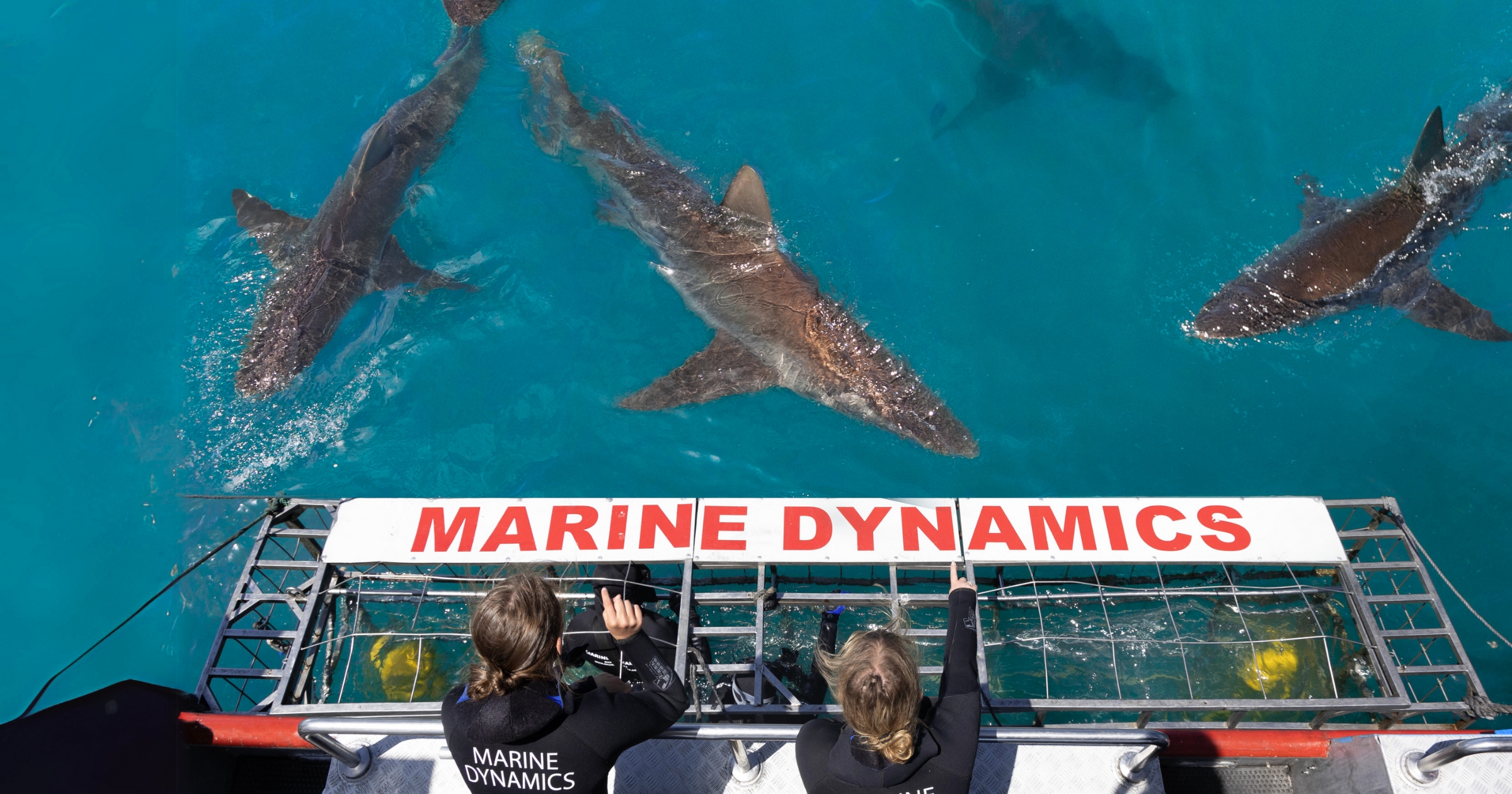
And if you haven’t joined us yet, this is what’s waiting for you. Not just a shark cage dive or a Marine Big 5 encounter, but a way to be part of real conservation work, happening right now off the coast of Gansbaai.
At Marine Dynamics, this isn’t a possibility; it’s how our conservation ecosystem actually works.
That is why we are incredibly honoured to announce that Marine Dynamics has been named a joint winner of the prestigious ATTA® Traveller Education and Awareness Award, sharing this recognition with Blood Lions in the first-ever shared category in the awards’ history.
Even more remarkably, this marks our second consecutive ATTA® award, following the Marine Impact Award in 2025.
But while winning international recognition is something we are immensely proud of, the award isn’t really about us. It’s about every person who has become part of our conservation story. Including you.
You Don’t Just Visit the Ecosystem. You Become Part of It.
Most wildlife experiences begin and end with a photograph or video clip. Ours begins with curiosity, and for many of you, that curiosity didn’t end when you left Gansbaai.
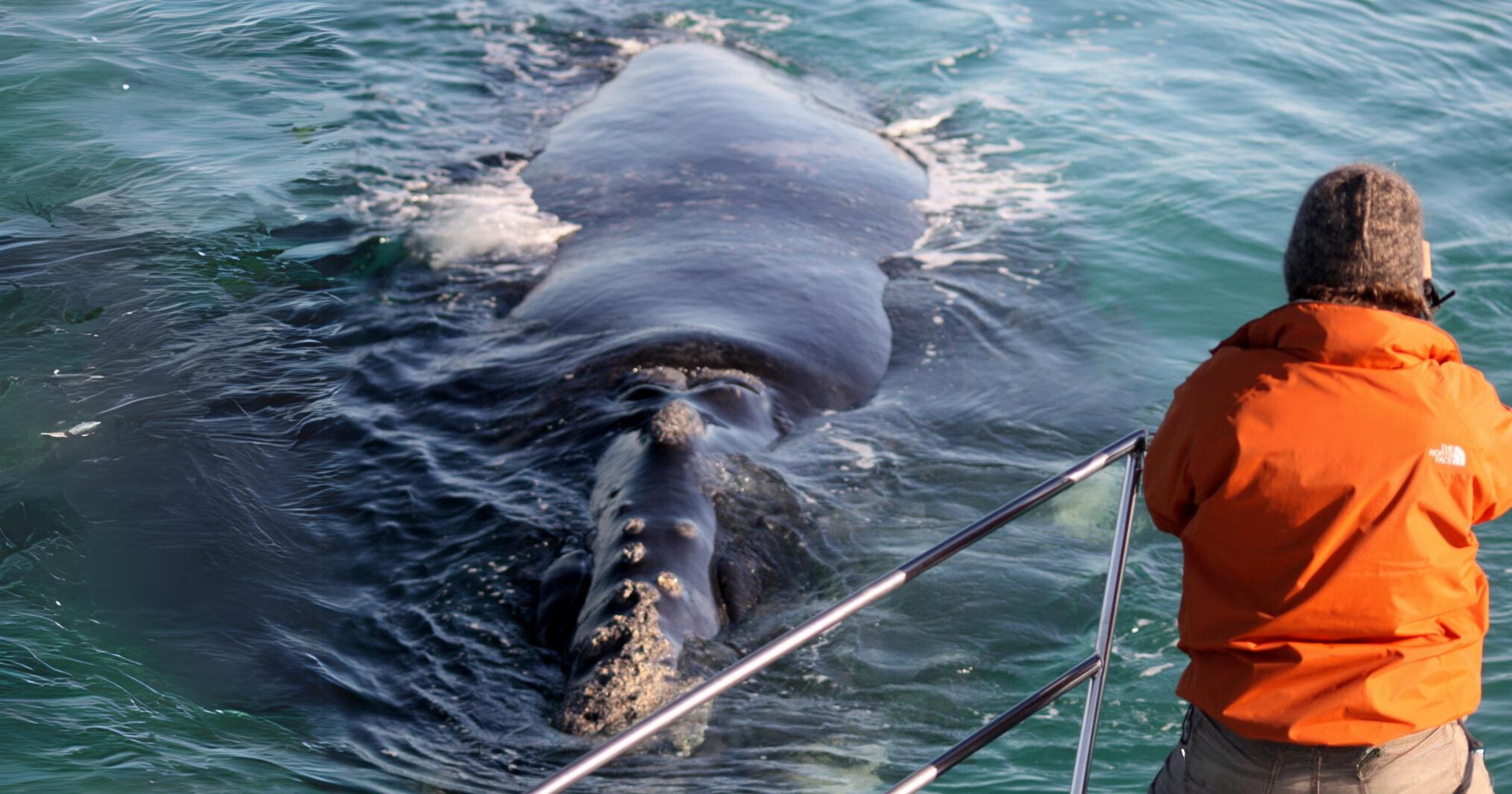
From the moment visitors step aboard one of our vessels, they enter a living conservation network that’s been evolving for more than 25 years. Every encounter with a whale, shark, dolphin, Cape fur seal or African Penguin is backed by real science, explained by our biologists, and connected to conservation work that continues long after the boat is back in the harbour.
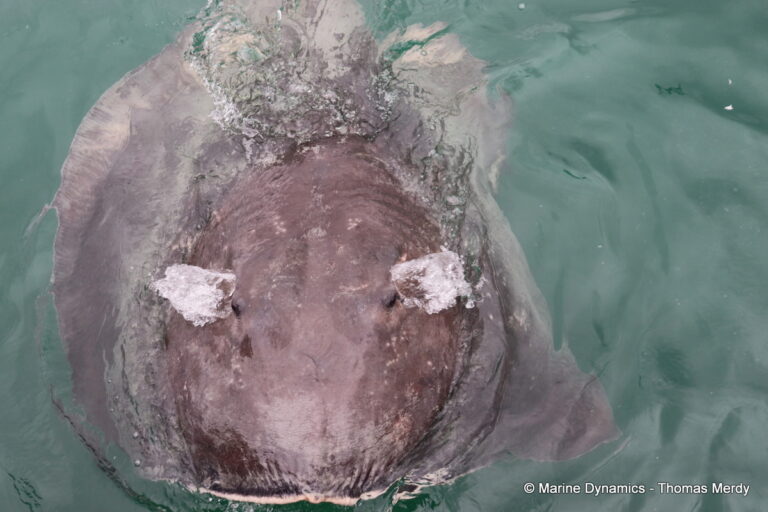
That moment when Alex asked our marine biologist, Amy, why she was taking pictures of the stingrays head, and his surprise to learn that each stingray has a unique pattern of spots, like a human’s fingerprint. The way to monitor a population.
If you’re planning your first trip out with us, this is what sets the experience apart: you’re not just watching wildlife, you’re meeting the people studying and protecting it, in real time.
One Ecosystem. Many Ways to Make a Difference.
Many people know Marine Dynamics for unforgettable shark cage diving, whale-watching and swimming with seals experiences. Fewer realise that those experiences are connected to a much larger conservation network.
Together with the Dyer Island Conservation Trust, Marine Dynamics Academy, and the African Penguin and Seabird Sanctuary, every visitor helps support an ecosystem built over more than two decades of marine research. This rich data has produced 40 peer-reviewed scientific publications on protecting sharks, whales, seabirds and marine ecosystems.
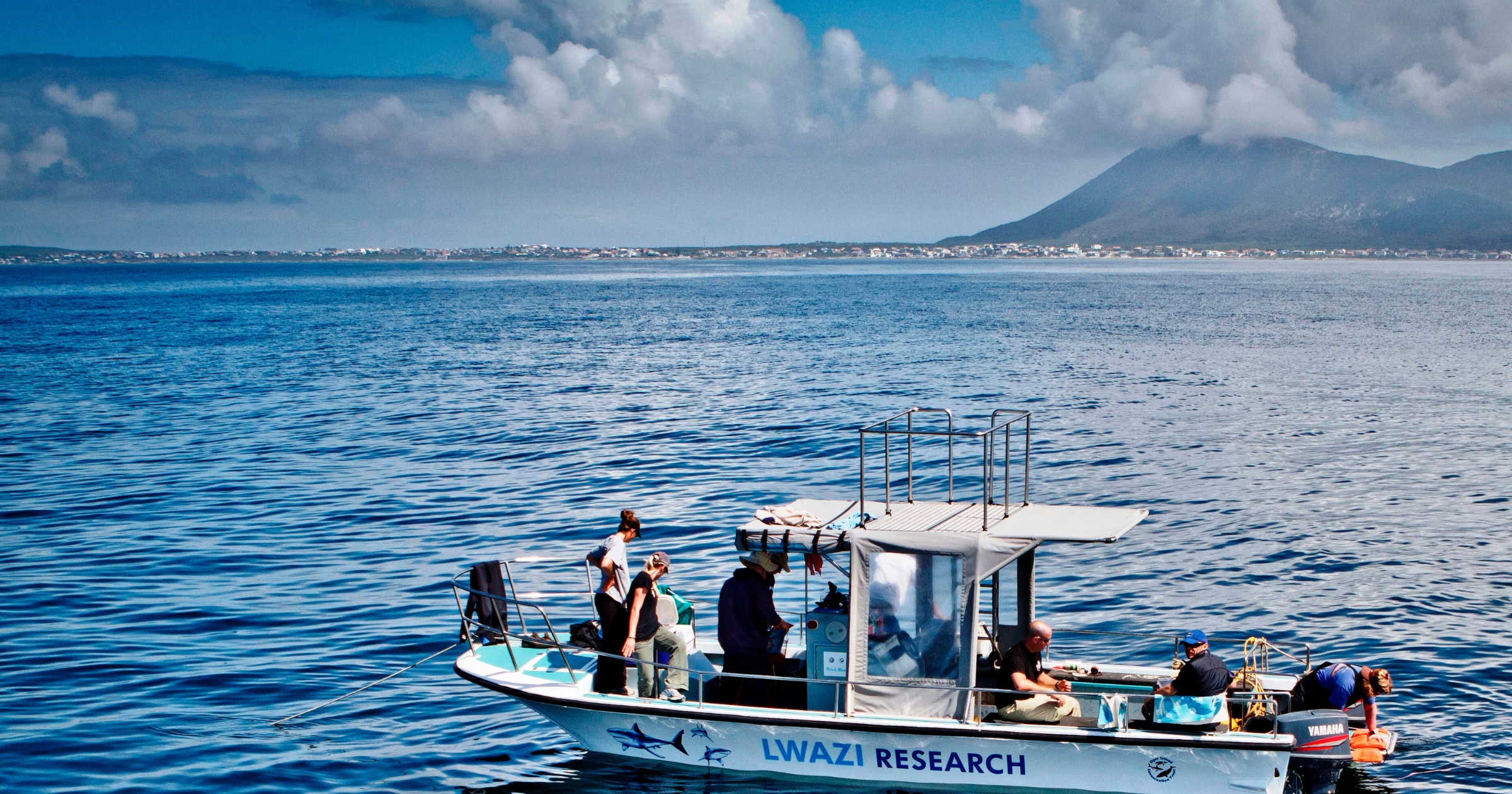
It’s an ecosystem where injured and endangered seabirds are rescued, treated and returned to the wild. Where environmental education reaches local schools, youth groups and international visitors. Where internships and volunteer programmes are actively developing the next generation of conservation leaders.
It’s beach clean-ups and citizen science. It’s public awareness campaigns that ask people to look at the ocean differently. And it’s long-term advocacy for stronger marine protection, including support for shark conservation and the vision of a Marine Protected Area for the Greater Dyer Island ecosystem.

If you’ve joined us for any of this, you’re part of that list too. And if you’re considering your first visit, this is the network your trip will plug into. Not a wildlife tour with a conservation message tacked on, but conservation work that happens to include you.
The Award Recognises More Than Education
The judges described Marine Dynamics as:
“An exceptionally strong example of conservation-led tourism education that successfully connects tourism, research, wildlife rehabilitation and community engagement into one highly impactful model.”
Those words mean a great deal to us, because they recognise something our team has believed from the very beginning: conservation works best when tourism, science, education, communities and wildlife rehabilitation aren’t separate efforts; they reinforce each other.
Conservation That Continues Long After the Journey Ends
Education isn’t measured by what people hear. It’s measured by what they do afterwards.
Independent research found that 74% of visitors adopted at least one environmentally friendly behaviour within four weeks of their experience, while 40% adopted four or more positive environmental behaviours.
In 2025 alone, our collective conservation ecosystem reached approximately 70,000 people through tourism, education programmes, community initiatives and wildlife rehabilitation. The same year, visitor contributions generated more than R3 million for marine conservation, helping support research, environmental programmes and the rehabilitation of injured seabirds.
These numbers matter to us not because they’re large, but because each one represents someone – maybe you – deciding to care a little more about our oceans.
Thank You for Becoming Part of the Ecosystem
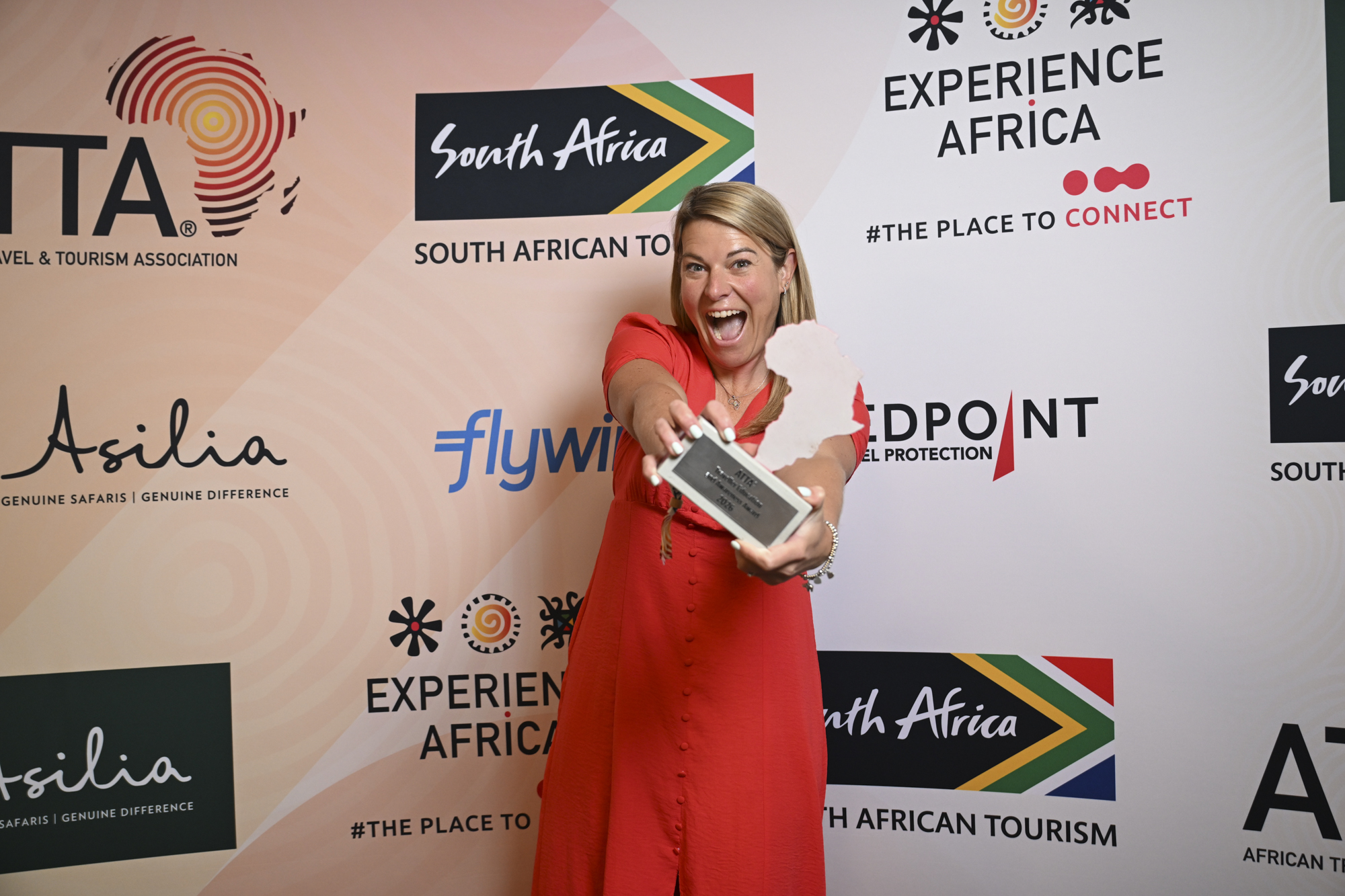
Fern Montgomery, Sales and Marketing Representative for 3Sixty Luxury Marekting Ltd receiving the award in the UK.
This award belongs to our crew, our scientists and educators, our rehabilitation staff and volunteers, our conservation partners, our interns and students, and our local communities.
It also belongs to you.
Whether you joined us on a Marine Big 5 tour, a shark cage dive, visited the African Penguin and Seabird Sanctuary, volunteered through the Marine Dynamics Academy, attended a Marine Evening or supported the Dyer Island Conservation Trust, you became part of something much bigger than a single experience. You became part of a living conservation ecosystem.
And together, we’re proving that tourism can do more than create unforgettable memories. It can help protect the future of our oceans.
Thank you for being part of the ecosystem.